

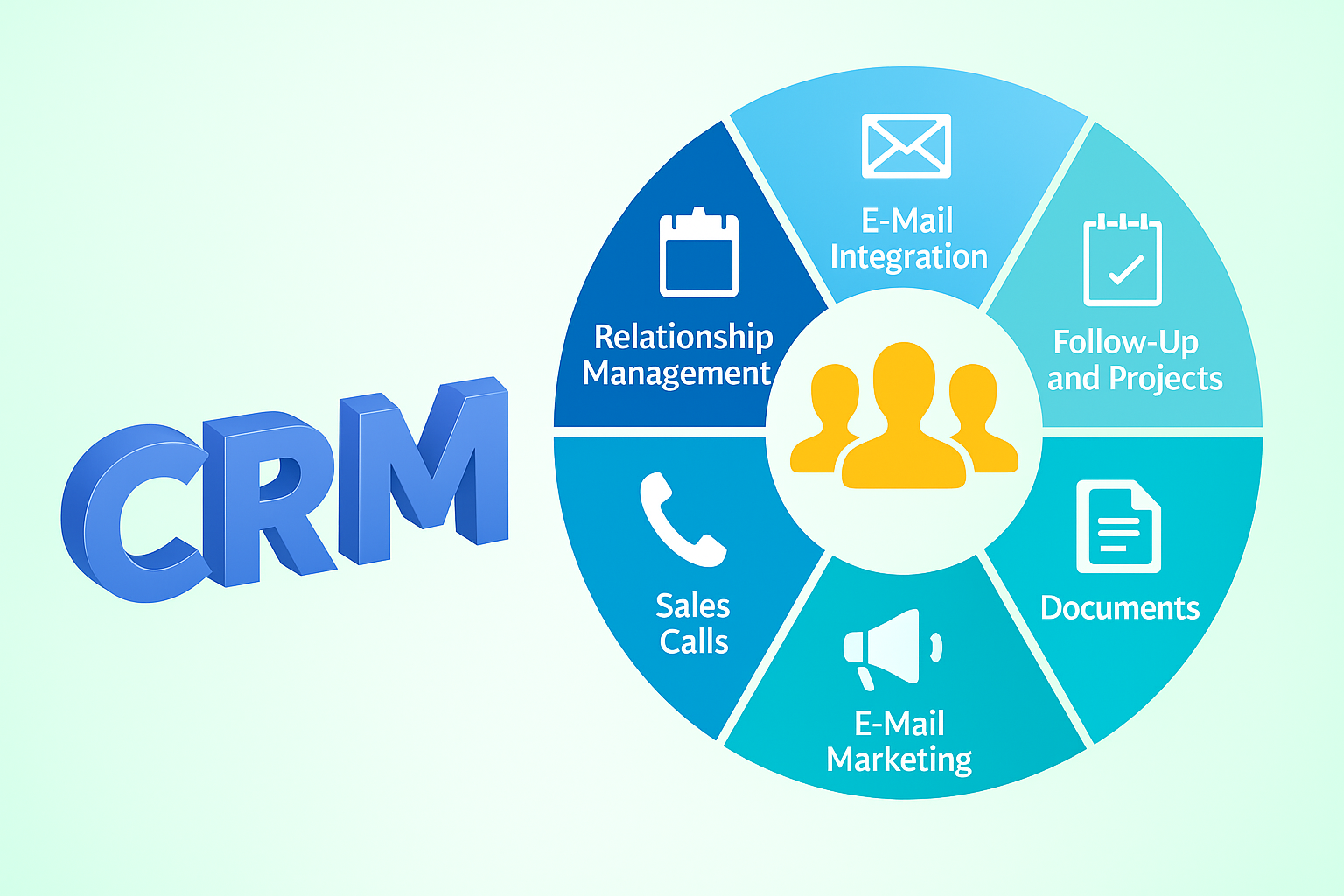
If you’ve ever wondered how businesses manage relationships with customers, track sales, and streamline communication across teams, the answer often lies in CRM. But what exactly is CRM, and why is it such an essential tool for businesses today? Let’s break it down.
What is CRM?
CRM stands for Customer Relationship Management.
It refers to the strategies, practices, and technologies companies use to manage and analyze customer interactions throughout the entire customer lifecycle.
A CRM system helps businesses stay connected with customers, improve relationships, and increase profitability by centralizing all customer data in one place.
Why is CRM Important?
In today’s competitive world, customer expectations are higher than ever. A missed follow-up, a delayed response, or poor communication can cost you a loyal customer. CRM ensures you never miss an opportunity by:
- Keeping all customer information organized.
- Tracking every interaction (emails, calls, chats, purchases).
- Automating repetitive tasks.
- Providing insights to make smarter business decisions.
In short, CRM empowers businesses to put customers at the center of everything they do.
Key Features of CRM
A good CRM system typically includes:
- Contact Management – Stores customer details like names, emails, phone numbers, and interaction history.
- Sales Management – Tracks leads, opportunities, and pipelines to close deals faster.
- Marketing Automation – Sends targeted campaigns, emails, and promotions automatically.
- Customer Support & Service – Manages tickets, chats, and queries to provide quick resolutions.
- Analytics & Reporting – Provides insights into customer behavior, sales performance, and trends.
- Collaboration Tools – Keeps sales, marketing, and service teams on the same page.
Types of CRM Systems
There are different types of CRM systems, depending on business needs:
- Operational CRM – Focuses on automating sales, marketing, and service.
- Analytical CRM – Helps analyze customer data for insights and decision-making.
- Collaborative CRM – Improves communication between different teams and departments.
Benefits of Using CRM
Implementing a CRM system can transform how a business operates. Some key benefits include:
- Better Customer Relationships – Understand and anticipate customer needs.
- Increased Sales – Track leads and close deals more efficiently.
- Improved Productivity – Automate routine tasks and free up time.
- Data-Driven Decisions – Use real-time insights to make informed choices.
- Customer Retention – Provide excellent service that keeps customers loyal.
Examples of Popular CRM Tools
Some widely used CRM software includes:
- Salesforce – One of the most popular, feature-rich CRM platforms.
- HubSpot CRM – Free and easy to use, great for small businesses.
- Zoho CRM – Affordable and customizable for different industries.
- Microsoft Dynamics 365 – A CRM integrated with Microsoft’s ecosystem.
Who Needs CRM?
CRM isn’t just for big corporations. Businesses of all sizes can benefit, including:
- Startups wanting to organize leads and build customer relationships.
- Small businesses looking to improve communication and reduce manual work.
- Enterprises managing complex customer interactions across multiple teams.
Basically, if your business deals with customers (which almost all do), a CRM can add value.
Conclusion
CRM is more than just software—it’s a strategy for building meaningful, long-term customer relationships. By organizing data, streamlining communication, and providing actionable insights, CRM helps businesses grow and stay competitive.
Whether you’re a small business or a large enterprise, adopting a CRM system can be the game-changer that helps you better serve your customers and achieve sustainable success.